



When Germany’s startup hubs are mentioned, the usual list is short: Berlin first, Munich second, and then often a pause. Yet the numbers suggest Saxony is becoming harder to ignore. According to the latest regional startup data, Saxony is home to 698 active startups, two unicorns and more than €1 billion in startup funding raised since 2020. The more interesting question is not whether Saxony now has a startup scene, but why a growing number of deep-tech founders are choosing to build there.
The answer is unusually physical. Dresden has become one of Europe’s most concentrated microelectronics locations. For a hardware startup, that matters. The industrial partners, suppliers and research institutions that founders elsewhere may need to travel across Europe to reach are clustered in and around the city: Infineon, Bosch, GlobalFoundries and, increasingly, TSMC’s European joint venture. Leipzig adds a second pole, with a stronger focus on energy, healthcare, logistics and digital business models.
Together, Dresden and Leipzig give Saxony a profile that differs from Berlin’s software-heavy startup culture. The region is not trying to become the next generic startup capital. Its advantage lies in fields where proximity to labs, factories, engineers and industrial customers can matter as much as access to venture capital.
A pipeline from university to industry
Saxony’s startup ecosystem is increasingly organized around a sequence: students are introduced to entrepreneurship, researchers receive support on intellectual property and company formation, early-stage teams move into incubators and later to accelerators. For deep-tech and hardware founders in particular, the region now offers something relatively rare: a support network connected directly to industrial infrastructure.
YETI Fellowship: the student entry point
For students who are curious about entrepreneurship but do not yet have a company or even a fixed idea, the YETI Fellowship is one of the earliest entry points. The program runs for 18 months across three semesters. It is free to join. Participants work on real projects, develop ideas from scratch and become part of a founder community before they have to commit to launching a startup. Originally based in Dresden, YETI expanded to Leipzig in 2025.
dresden|exists: the first stop out of the lab
When a research project begins to look like a potential company, many Dresden-based founders encounter dresden|exists. The organization is the shared startup service of Dresden’s universities and research institutions. Its work is practical and early-stage: helping founders think through business models, legal structures, funding routes and intellectual property questions. dresden|exists is not an accelerator in the classic sense. Its role is closer to that of a first advisory layer for founders emerging from academia.
TUD|excite: the university transfer engine
TUD|excite, the TUD Excellence Center for Innovation, Transfer and Entrepreneurship, is a center within TU Dresden. Its role is not to run a public-facing accelerator cohort, but to help move university research toward application. That includes patent and IP management, technology transfer, industry partnerships, spin-off support and entrepreneurship education. In practice, TUD|excite is part of the machinery that allows university inventions to become market-facing technologies. For founders, this can make the difference between having an interesting thesis result and having a technology that can be licensed, protected, financed and built into a company.
ExciteLab: Dresden’s deep-tech innovation hub
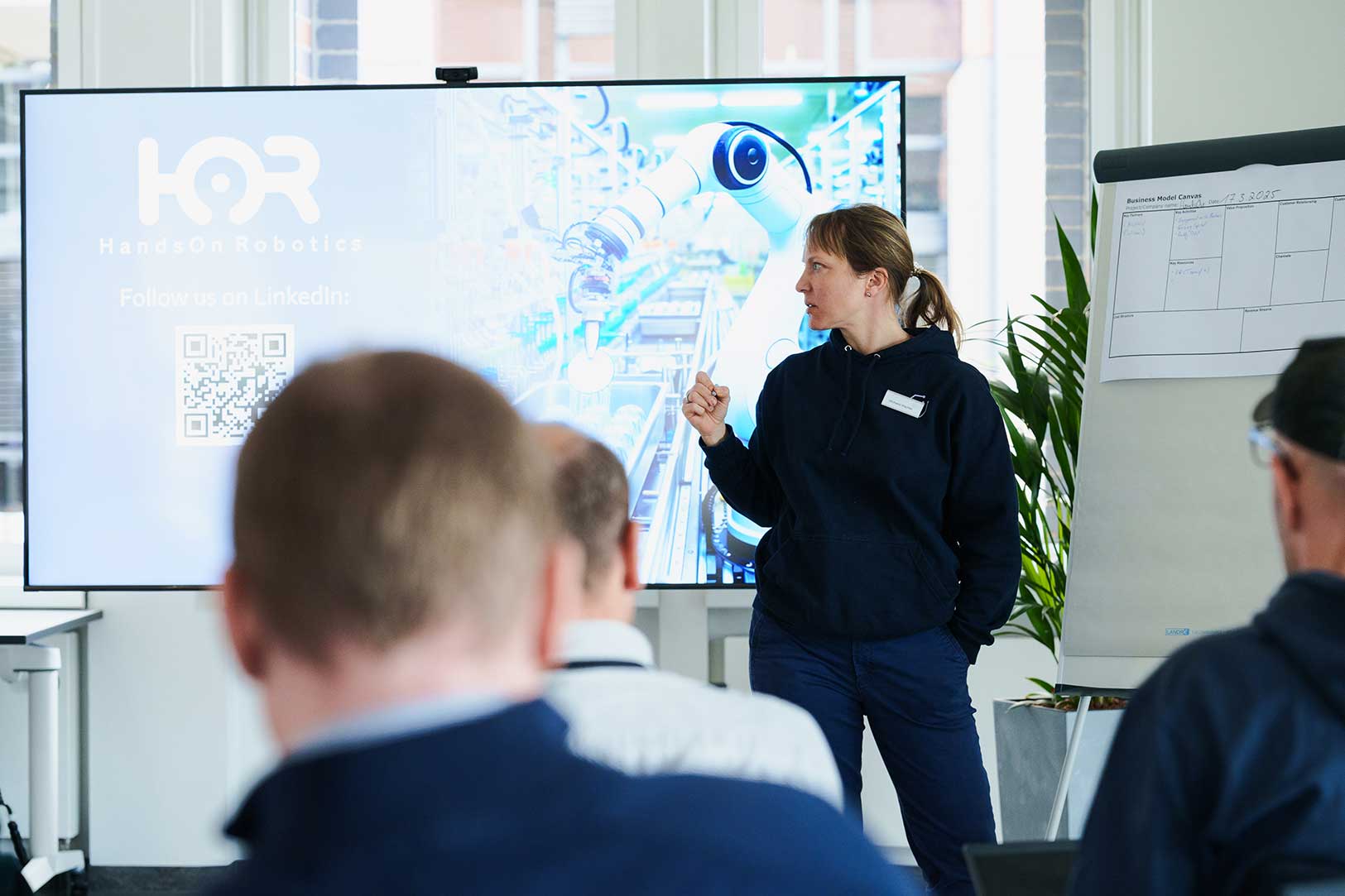
ExiteLab offers, among other things, a six-month accelerator for startups in robotics, sensors, the IOT, semiconductors and quantum technologies. The program is free, takes no equity and is run by the SpinLab Group, which also operates SpinLab in Leipzig and RootCamp in Hannover. But ExciteLab is not only a startup program. It also works with established companies through services such as venture clienting, helping industrial partners identify and test startup technologies that could solve concrete business or production challenges. That dual role matters in Dresden: the region’s strength lies not only in producing startups, but in connecting them quickly with research networks, engineering expertise and potential industrial customers such as Infineon, ZEISS and VON ARDENNE.
SpinLab Leading Startup Hub in Europe
In Leipzig, SpinLab covers a different part of Saxony’s startup landscape. It is best known for its six-month, equity-free accelerator, but the organization has grown into one of Europe’s more recognized startup hubs, with multiple international awards. Its focus areas reflect Leipzig’s economic base: energy, construction, health and smart city. That makes the city a logical landing point for startups whose technologies need more than mentoring. Energy startups, for example, can find potential customers and industry partners nearby, including companies such as VNG and enviaM. For founders, that local access can be more valuable than a generic accelerator network. Like ExciteLab in Dresden, SpinLab also works beyond its startup program. Through venture clienting and related corporate innovation services, it helps established companies identify, test and adopt startup technologies.
boOst Startup Factory: the umbrella for Central Germany
The newest layer in the system is boOst, the startup factory for Central Germany.boOst is intended to connect universities, accelerators, investors and industrial partners across Saxony and Thuringia. In July 2025, it was selected in the German government’s Startup Factories flagship competition. The initiative secured up to €10 million in federal funding, to be matched by at least the same amount from industry partners including Infineon, ZEISS, Bosch and Volkswagen. The goal is to make the region’s startup pipeline more coherent. boOst now runs its own programs, including a tech incubator, entrepreneurship education and international landing pads. Its first incubator cohort ran in the beginning of 2026 across Dresden, Leipzig and Jena, with ten universities feeding into the program. Saxony’s founder pipeline is no longer limited to the two headline cities. The ecosystem is trying to become regional rather than local.
Specialists beyond the hardware track
Saxony’s startup system is most convincing in deep tech and hardware, but it is not limited to chips, sensors and quantum computing.
Impact Hub Dresden and Leipzig supports social entrepreneurs with coworking, community and coaching. The Future Mobility Incubator at Volkswagen’s Gläserne Manufaktur gives mobility startups access to Volkswagen’s production and industry expertise. R42 in Leipzig runs a nine-month accelerator for game founders. The Life Science Inkubator Sachsen supports biotech and medtech teams with lab space and sector-specific expertise. Moreover Leipzig’s health-tech profile is strengthened by medical:forge, an accelerator for early-stage MedTech startups developing smart medical devices and therapies.
These specialized programs prevent the ecosystem from treating all startups alike. A mobility founder, a biotech team and a games studio need different networks, timelines and infrastructure.
Saxony is no longer a hidden player
Saxony’s startup story is still developing. Dresden and Leipzig have developed into credible second-tier startup hubs with distinct profiles, growing support structures and increasingly visible links between founders, research institutions, investors and industry. That does not mean Saxony is about to replace Berlin or Munich. It is not trying to. Its relevance lies elsewhere. Like other strong second-tier ecosystems in Europe, Saxony offers founders a different proposition: closer access to industrial customers, lower noise, strong university pipelines and specialized support.
Note: Saxony’s startup ecosystem includes many more initiatives, networks, and support structures beyond Dresden and Leipzig. Not all of them could be included in this article, so this overview does not claim to be exhaustive.
/RootCamp_Logo-Ecosystem.png?width=200&name=RootCamp_Logo-Ecosystem.png)

/Bitroad_Logo-Ecosystem.png?width=200&name=Bitroad_Logo-Ecosystem.png)